

Financial Literacy Isn’t the Problem. Systemic Disinvestment Is. | Groundbreakers
Young people aren’t failing to understand money. The systems around them have failed to invest in their financial education, access, and long-term economic mobility.


Published during Financial Literacy Month.
Co-authored by Aspen Institute Financial Security Program Community Advisory Group members, Ariana Arana Bermudez, Antonio Gutierrez Estrada, and William Moreno.
Financial literacy is the difference between making decisions about your life and having them made for you. The difference between choosing where to live and being placed there, between planning for your children’s future and hoping they figure it out. Money is passed down generationally and so is the stability and safety it creates, which allows children to grow up with a better relationship to money and have more opportunities to create pathways to generational wealth.
“Financial literacy is the difference between making decisions about your life and having them made for you.”
Financial literacy is also a civic issue. The people most directly affected by economic policy, minimum wage laws, housing regulations, tax codes, and healthcare costs are often the least equipped to engage with the systems that produce those policies. Survival is a full-time job. When you are stretching each paycheck to cover rent, groceries, transportation, and childcare, there is no time left to attend a city council meeting or research a ballot measure. Financial instability limits political voice, and a democracy that only hears from people who can afford to show up does not function the way it should.
“Financial instability limits political voice, and a democracy that only hears from people who can afford to show up does not function the way it should.”
This is especially true for young people. The financial habits, relationships, and traumas that shape someone’s economic life are largely formed before they turn 25. And yet, the institutions responsible for young people during these formative years–schools, universities, employers, and government programs–have consistently failed to provide the infrastructure for financial learning.
“The financial habits, relationships, and traumas that shape someone’s economic life are largely formed before they turn 25.”
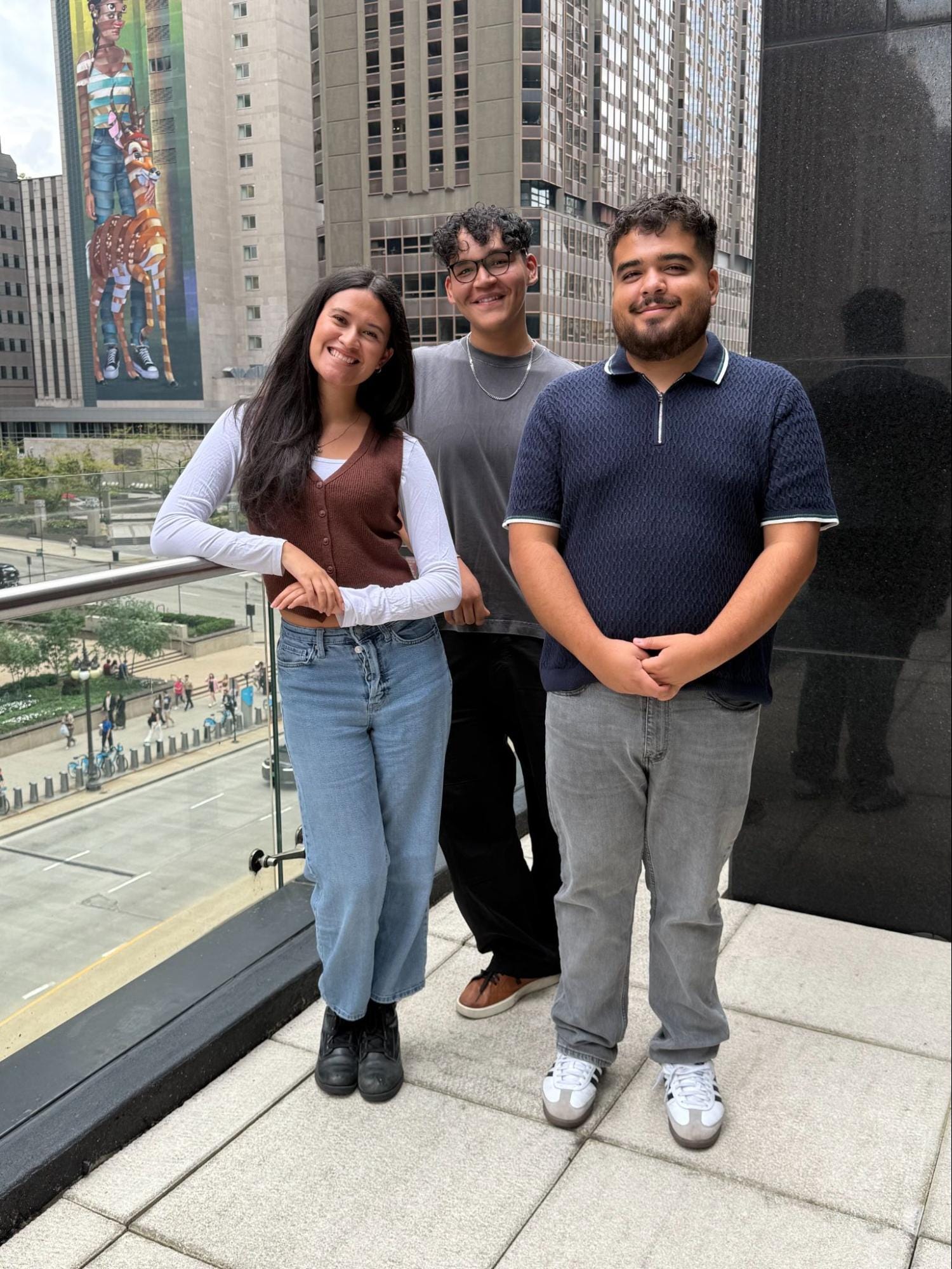
Ariana, William, and Antonio at the 2025 Community Advisory Group Member Convening hosted by the Aspen Financial Security Program team.
Last July, we all joined the Aspen Institute Financial Security Program’s Community Advisory Group but the three of us came to this work from different places. A low-income neighborhood with more payday lenders than banks. A migrant farmworking family where income disappeared with the season. A strip mall in Colorado where a sixteen-year-old learned that getting paid meant losing money. Our stories are different. The structural failure connecting them is not.
The Cash-Checker on the Corner: Ariana’s Story
Financial literacy is a necessary life skill that is often systematically withheld from young people, particularly marginalized young people. It is a documented fact that in low-income communities, the majority of which are predominantly people of color, there is more access to predatory financial services like cash-checkers and payday lenders than reliable banking institutions. I grew up going to Cash-Checkers with my grandmother weekly, simply because there was one a block from our house. As a child, I thought of these services as equivalent to banks until I joined MyPath at 18. Through their financial capability education, I learned the difference between predatory and safe financial institutions, and with that knowledge, I’ve been able to discourage family members from falling victim to these services.
“Financial literacy is a necessary life skill that is often systemically withheld from young people, particularly marginalized young people.”
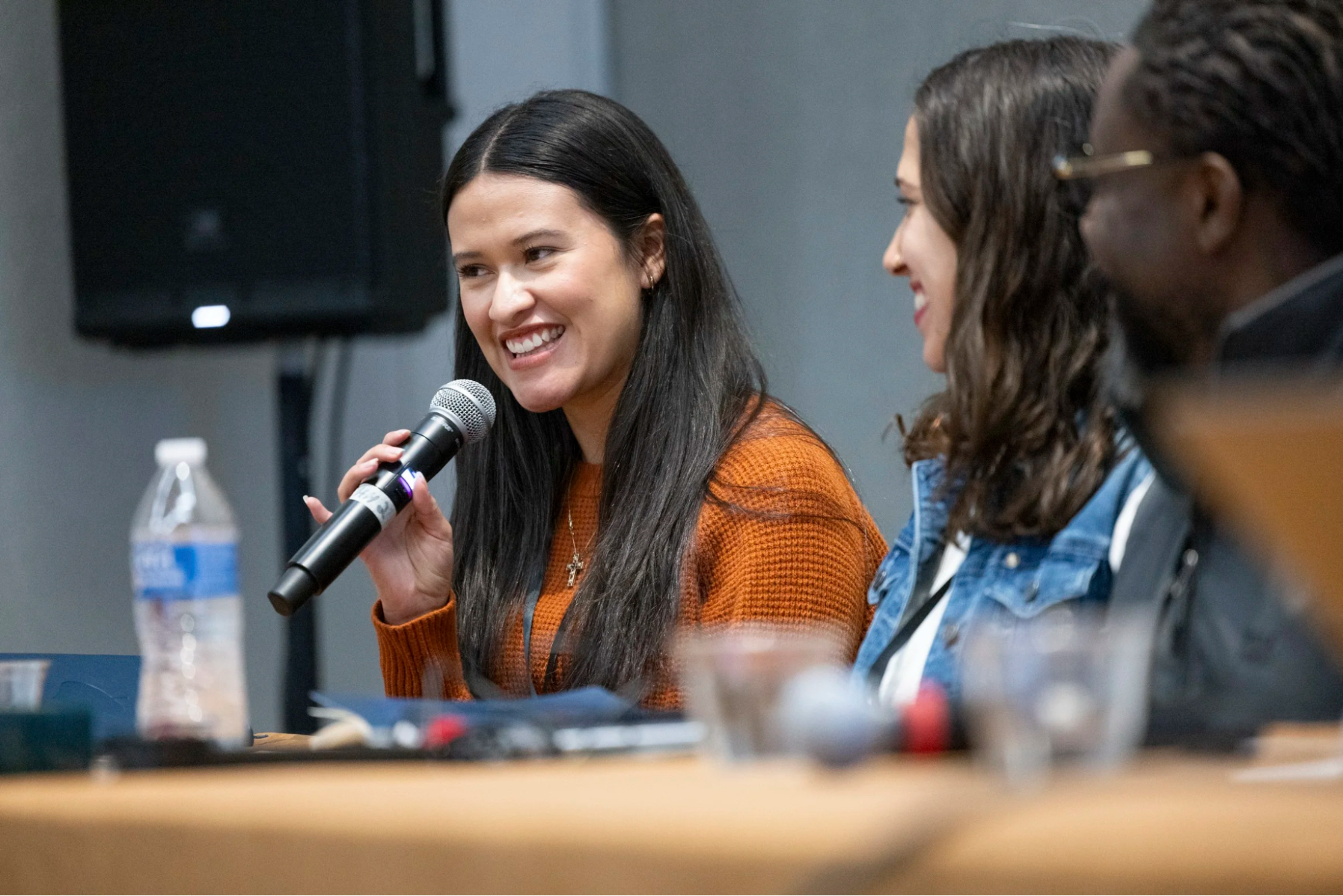
This is the reality for millions of young first-generation Americans. Young peoples’ financial experiences are shaped by their family’s wealth and knowledge. When neither exists, the only other way young people are able to learn about money is through negative experiences, schools, or community-based organizations that are concentrated in wealthy cities. A lack of access to financial literacy reinforces wealth inequities that can only be addressed through systemic change.
Part of this change requires making financial literacy widely available to American young people. I have spent the last four years teaching financial literacy to young people and have personally seen how transformational it can be for individuals, families, and their communities. Young people who understand basic topics like banking, budgeting, credit building, loans, and savings enter adulthood with a sense of control over their lives. Financial literacy empowers them to build a new relationship with money, seeing it as a tool for social mobility that will allow them and their families to move past survival into wealth building. It is crucial that financial literacy be offered as early as high school. This knowledge should not be restricted to a lucky few, especially when marginalized young people need it the most.
While financial literacy is incredibly important, it’s not enough. Young people need financial capability. Financial capability education requires access to the financial system, including non-custodial checking and savings accounts, online banking, and stipends to practice habits like budgeting and saving. No one can learn to drive a car without actually getting behind the wheel- the same is true for young people navigating the financial system.
The Season Ends and the Money Doesn’t Follow: Antonio’s Story
Growing up in migrant housing during many years of my life gave me a firsthand understanding of the financial instability that seasonal farmworkers face. For many families like my own in rural areas of the United States, and especially in California, income is unpredictable because it’s tied directly to agricultural cycles. Work is temporary, physically demanding, and dependent on factors like the weather, market prices, and especially crop yield. This instability makes it difficult for farmworkers to plan for long-term financial goals like saving money to buy a house or build lasting financial security.
“Income is unpredictable because it’s tied directly to agricultural cycles - making long-term financial stability nearly impossible.”
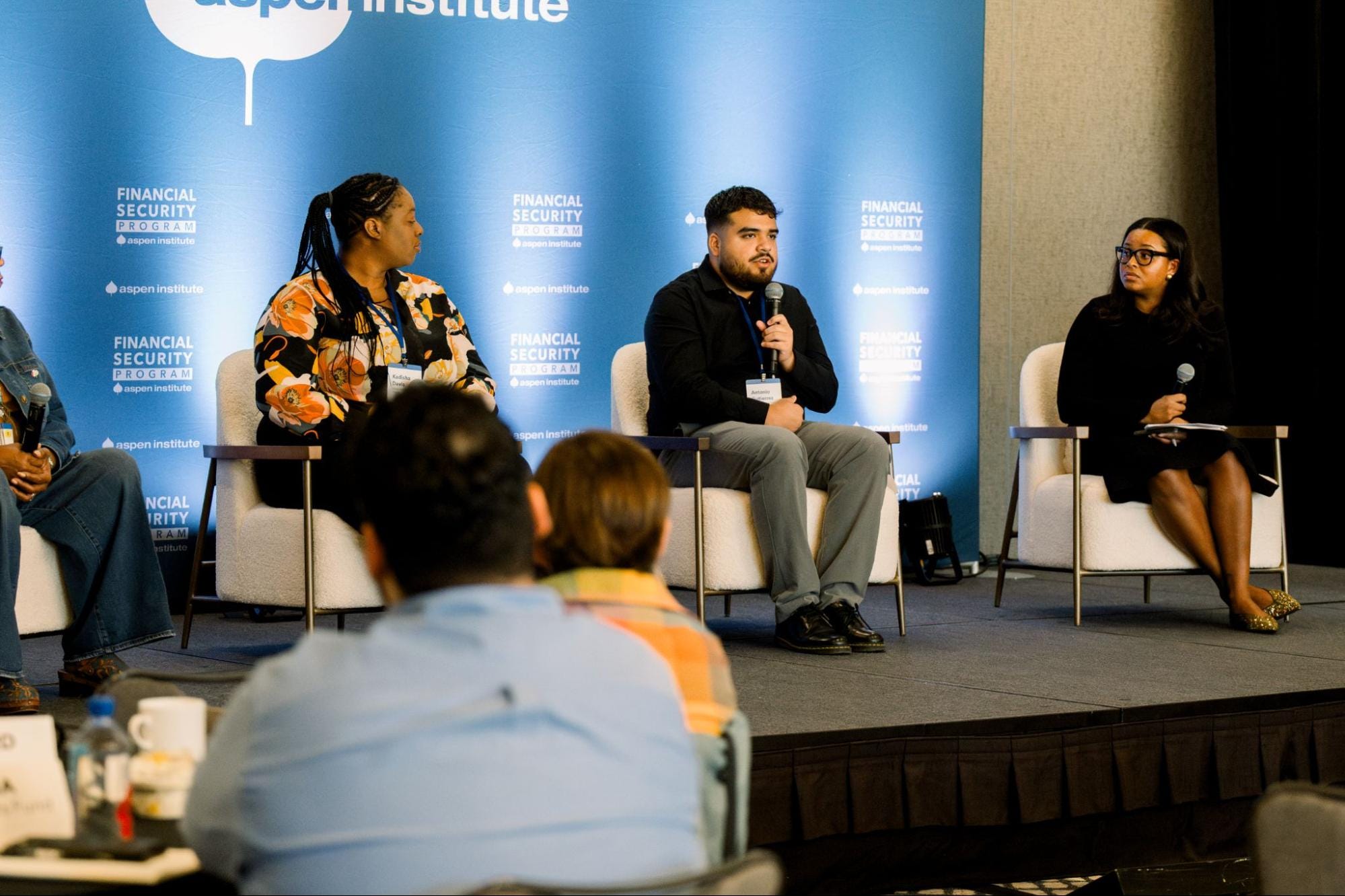
One of the biggest challenges is the lack of consistent income. During the peak of harvest months, farmworkers may earn enough to make ends meet, but during the off-season, it forces families to rely on government programs, like unemployment for those that qualify, and for those that don’t, leading them into long-term financial stress. Additional barriers, such as language differences and immigration concerns, prevent many farmworkers from using traditional financial services.
Rural communities also lack resources. Financial institutions, educational programs, and healthcare services are often far away or difficult to access without public transportation. As a result, many individuals turn to high-fee services like check-cashing stores, which can trap families in cycles of debt, debt that makes it nearly impossible for them to save money.
Financial literacy and systemic improvements are a key part of improving long-term stability. Bringing trusted institutions like credit unions and expanding mobile banking services into rural areas can help farmworkers manage their money through stable pathways. Financial literacy should be part of the high school curriculum, and community centers can teach the basic financial skills. Even more, providing workshops in other commonly spoken languages, like Spanish, can help families learn how to budget and plan for the future. And expanding the availability of public transportation can help rural communities access all of these services. Addressing these challenges is essential to create both community-centered solutions and increased access to financial education.
Ten Percent: William’s Story
If you handed a 16-year-old his first paycheck, and the only place in his neighborhood to turn that check into cash took ten percent of the top, no explanation, no alternative, no one in his life to tell him that the bank three miles away would do it for nothing, whose failure is that? His?
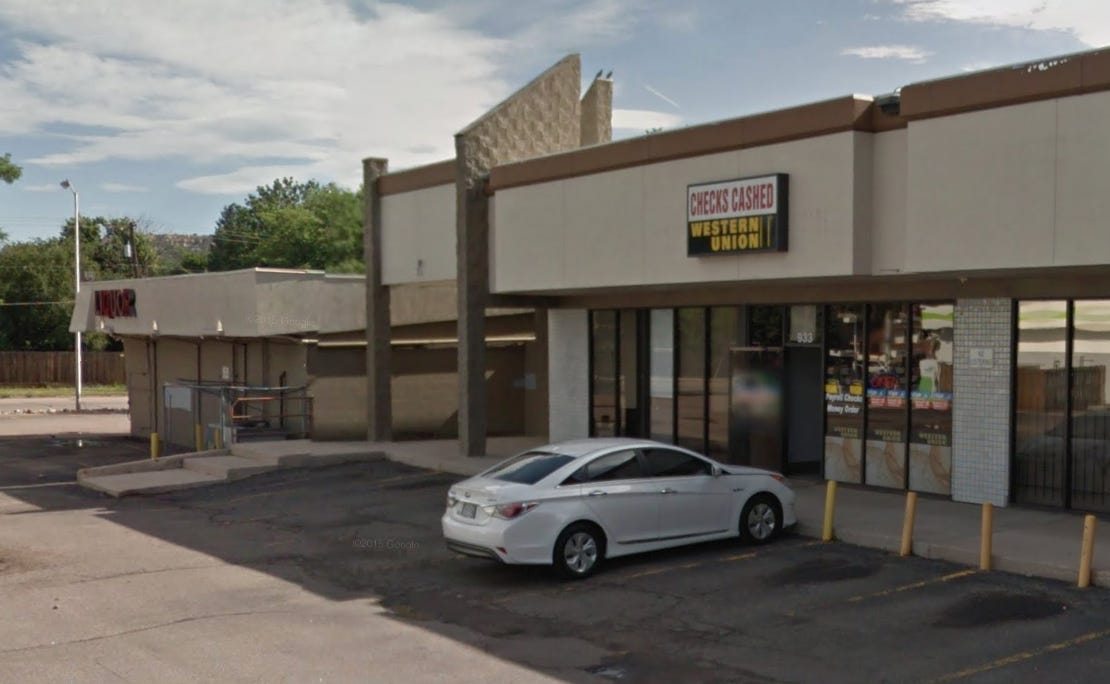
This is where William, 16, cashed his checks in his hometown of Colorado Springs.
That was me in a strip mall off a four-lane road, watching the man behind the glass count out what was left of my money. And I walked out thinking that was normal. This is what it means to grow up without financial infrastructure. Not that you make bad choices, but that those chances were made before you arrived.
I am a first-generation college student at the University of Colorado Denver. I co-founded a non-profit called TheCHANGEproject. And the lesson I keep arriving at, in both settings, is the same: the institutions that position themselves as core for young people’s advancement are often the same institutions that undermine them.
There is a dominant narrative about financial literacy for young people in this country, one of individual responsibility. Learn to budget, open a savings account, understand compound interest, use financial products to grow your money, and the system will meet you halfway. The narrative is attractive precisely because it is simple, locating the problem inside the person rather than inside the architecture. But the evidence points elsewhere. Research has shown that neighborhood socioeconomic characteristics and childhood family circumstances explain nearly half the financial literacy gap between white and Black or Hispanic Americans. A product of place, proximity, and access, beyond conditions that those individuals chose and cannot, on their own, fully overcome.
“The narrative is attractive because it is simple - locating the problem inside the person rather than inside the system.”
Education, the very mechanism we have designed as the great equalizer, does not equalize here. It cannot because it operates inside a system that remains unequal. Low-income students are more likely to hold unpaid internships, while institutional selectivity is the strongest predictor of obtaining a paid one. Nearly sixty percent of Black undergraduates and fifty-three percent of Hispanic undergraduates come from low-income households. Thirty-three percent of white students do. The unpaid internship becomes a sorting machine, one that filters along class lines while presenting itself as meritocratic.
I have seen the downstream consequences of this at a scale that is difficult to abstract away from. Young organizers at TheCHANGEproject arrived with the analysis, commitment, and willingness to do the work. And then they were gone because the cost of participation exceeded what they could absorb. What looks, from the outside, like disengagement is usually an economic calculation made under constraint. We lose them because the institutions surrounding them never built the infrastructure to sustain their participation.
“What looks like disengagement is usually an economic calculation made under constraint.”
What we are Actually Asking for
Young people’s financial experiences are not a result of their individual choices - it is generational, systemic, and intentional. Our current financial system is built in a way that strengthens inequities, and addressing them requires access, investment, and consideration.
So what would it look like to take young people’s financial futures more seriously? It would look like non-custodial checking and savings accounts, so teenagers can build habits with real money before they turn eighteen. It would look like final-capability programs funded in every public high school, not just in wealthy districts. It would look like paid internships as the baseline necessity, because an economy that requires young adults to work for free to enter the workforce is one that has decided in advance who gets to participate. It would look like stipends for young organizers, volunteers, and community leaders who are already doing the work the institution takes credit for.
“Young people’s financial experiences are not a result of their individual choices - they are generational, systemic, and intentional.”
This would require something harder than policy, a fundamental shift in seeing young people as equal stakeholders in the systems shaping their lives. Not as future adults who might one day matter. As people who matter now, who are working harder than any generation before them to prove themselves inside systems that were not designed to hold them. Until the institutions that profit from our ambition start building it, the phrase “financial literacy” will remain what it has always been: a way of blaming the people the system was never built to serve. Stop calling it illiteracy, it’s disinvestment.
“Stop calling it illiteracy - it’s disinvestment.”
About the Authors:
William, Antonio, and Ariana are Community Advisory Group (CAG) members with the Aspen Institute Financial Security Program.
William Navarrete Moreno is a graduating senior at the University of Colorado Denver studying Public Health, and Co-Executive Director of TheCHANGEproject, a Colorado-based youth-led nonprofit advancing health equity through advocacy and policy change. He joined the CAG, grounded in the belief that financial security and health outcomes are fundamentally inseparable, and that those most affected by economic instability must shape the research and policy agenda.
Antonio Gutierrez Estrada is a senior at California State University, Sacramento, studying Political Science. He is currently a legal assistant at a law firm focused on workers’ compensation. He joined the CAG, based on the need to bring rural area and migrant farmworkers’ voices into the conversation about financial security and the lack of resources we faced in rural areas.
Ariana Arana Bermudez is the Youth Program Associate at MyPath where she leads the POWER Leaders (Policy Organizers for Wealth and Economic Rights) program in which she teaches young people ages 16-24 about financial capability, wealth building, advocacy and campaigning. This year they are spearheading a refresh of the Youth Economic Bill of RYTS, a document that identifies the most pressing issues young people are facing and proposes youth-centered policy-based solutions. Ariana joined the CAG to uplift the voices and experiences of young people and work to ensure that we are part of the decisions that impact our financial future.
The views and opinions expressed in community-contributed articles published on this Substack are those of the individual contributors and do not necessarily reflect the views of the Center for Rising Generations.
CRG is committed to providing a platform for a wide range of voices and experiences. Some posts may address complex issues, personal stories, or calls to action meant to inspire reflection and community engagement. We encourage respectful dialogue and learning across generations.
 | A guest post by
|
Thank you for sharing your voice and lived experience, @William Navarrete Moreno !